


USB4 vs. Thunderbolt 4: A Comparison of Data Transfer
- Technology Explained
- August 8, 2023
- No Comment
- 26
1. Introduction to USB4 and Thunderbolt 4
USB4 and Thunderbolt 4 both aim to address the increasing demand for faster and more versatile data transfer options. USB4, developed by the USB Implementers Forum (USB-IF), represents the latest iteration of the Universal Serial Bus technology. Thunderbolt 4, on the other hand, is Intel’s brainchild, designed to provide lightning-fast connectivity for a variety of devices.
2. Shared Features and Performance
Both USB4 and Thunderbolt 4 offer impressive data transfer speeds, with USB4 boasting up to 40 Gbps and Thunderbolt 4 matching that speed. These technologies use the USB Type-C connector, ensuring compatibility across a wide range of devices. Additionally, they support power delivery, video output, and daisy-chaining multiple devices.
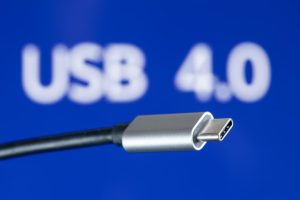
3. Key Differences Between USB4 and Thunderbolt 4
While USB4 and Thunderbolt 4 share many features, there are crucial differences that set them apart. Thunderbolt 4, for instance, offers support for two 4K displays or one 8K display, making it ideal for professionals working with high-resolution content. USB4, although not as versatile in terms of video output, still provides robust performance for everyday users.
Another differentiator is the level of PCIe (Peripheral Component Interconnect Express) support. Thunderbolt 4 guarantees at least 32 Gbps of PCIe bandwidth for connected devices, allowing for seamless integration of high-performance peripherals. USB4, while also supporting PCIe data transfers, might not provide the same level of bandwidth in all implementations.
4. Choosing the Right Technology for Your Data Transfer Needs
When deciding between USB4 and Thunderbolt 4, it’s essential to consider your specific use case. If you’re a creative professional working with resource-intensive tasks, Thunderbolt 4’s superior video output and PCIe support might be more suitable. On the other hand, if you’re primarily focused on general data transfer and compatibility, USB4 provides a strong performance-to-cost ratio.
In conclusion, USB4 and Thunderbolt 4 bring significant advancements to the realm of data transfer technologies. Their shared features, coupled with their unique strengths, make them valuable options for various users. As you assess your needs, carefully weigh the performance, versatility, and compatibility aspects to determine whether USB4 or Thunderbolt 4 will propel your data transfer experience to the next level.





