



Understanding the Purpose Behind Different Snake Colors
- Pet and animal
- May 23, 2023
- No Comment
- 17
Introduction: The world of snakes is a captivating realm of stunning colors and patterns that have long intrigued both scientists and enthusiasts. Beyond their aesthetic appeal, snake colors serve essential purposes in their survival and interactions with their environment. From camouflage to warning signals, these hues are not merely ornamental but play a crucial role in the intricate tapestry of the natural world. In this article, we delve into the fascinating world of snake colors, exploring their purposes and shedding light on the evolutionary significance behind them.
- Camouflage: Blending into the Environment Camouflage is a common purpose behind snake colors. Many snake species exhibit coloration that closely matches their natural habitat, enabling them to blend seamlessly into their surroundings. For example, the Green Tree Python’s vibrant green scales match the foliage of trees in rainforests, providing excellent camouflage from both predators and prey. Such color adaptations allow snakes to become virtually invisible, increasing their chances of survival.
- Warning Signals: Bold Colors and Patterns Snake colors can also act as warning signals, indicating potential danger to predators. Venomous snakes, such as the Coral Snake, often display vivid patterns of bright colors, typically red, yellow, and black. These colors serve as a visual message, warning potential threats about the snake’s venomous nature. By advertising their toxicity through distinct colors, these snakes deter predators and avoid unnecessary confrontations.
- Mimicry: Benefiting from the Dangerous Mimicry is another intriguing aspect of snake coloration. Some non-venomous snake species have evolved to mimic the appearance of venomous snakes, gaining protection without actually possessing venom. This form of mimicry, known as Batesian mimicry, allows harmless snakes to benefit from the warning signals associated with venomous counterparts. A prime example is the Scarlet Kingsnake, which closely resembles the venomous Coral Snake, deterring predators who mistake it for a dangerous species.
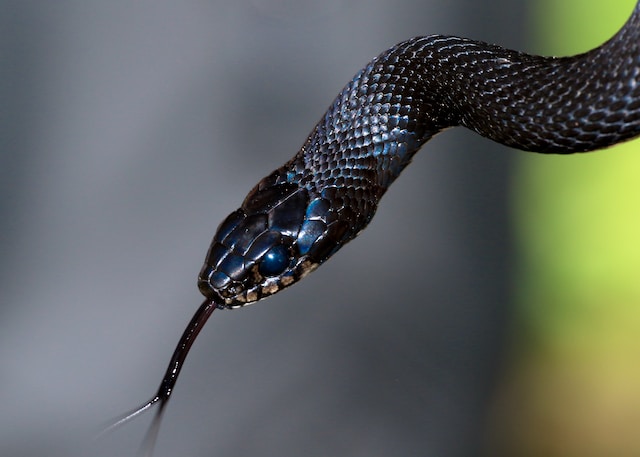
- Thermal Regulation: Dark and Light Colors Snake colors can also aid in thermal regulation, helping these cold-blooded reptiles maintain their body temperature. Dark-colored snakes, such as the Black Rat Snake, absorb more heat from sunlight, enabling them to warm up quickly. On the other hand, lighter-colored snakes, like the Desert Horned Viper, reflect sunlight and stay cooler in hot environments. These color adaptations allow snakes to optimize their energy efficiency and regulate their body temperature effectively.
- Species Identification: Individual and Sexual Variation Snake colors contribute to species identification, allowing researchers and enthusiasts to differentiate between various snake species. Each species has its unique coloration patterns, which can range from solid colors to intricate stripes and spots. Furthermore, within a species, individual snakes may exhibit slight color variations, providing researchers with valuable insights into population genetics and individual identification. Additionally, some species display sexual dimorphism, with males and females exhibiting distinct coloration, aiding in reproductive interactions.
Conclusion: Snake colors are not merely superficial characteristics but serve a range of essential purposes in the complex world of these fascinating reptiles. From camouflage to warning signals, snake colors have evolved to enhance survival, reproduction, and thermal regulation. Understanding the purpose behind different snake colors enables us to appreciate the intricate adaptations and ecological interactions that shape the natural world. By unraveling the secrets behind snake coloration, we gain a deeper understanding of the remarkable diversity and complexity of life on Earth.





