




Understanding Artificial Intelligence: A Simple Explanation
- Technology Explained
- August 23, 2023
- No Comment
- 26
What Is Artificial Intelligence?
Artificial intelligence (AI) may conjure images of humanoid robots and super-intelligent computers, but today, it’s much more than that. AI is a branch of computer science focused on creating machines that mimic human intelligence. It involves developing algorithms that enable computers to learn from data and make decisions based on that data, rather than relying solely on explicit instructions.
Within AI, there’s a subset called machine learning (ML), which allows systems to “learn” from data and improve their performance as they acquire more datasets. Deep learning, another subset, employs artificial neural networks to make decisions, simulating how the human brain learns and decides.
Natural language processing (NLP) is another critical aspect of AI, enabling machines to understand and interact with humans using natural language. This capability is essential for applications like virtual assistants and AI chatbots.
AI can be categorized into two main types: narrow AI, designed for specific tasks like facial recognition or internet searches, and artificial general intelligence (AGI), which possesses human-like cognitive abilities and can outperform humans in most economically valuable work. AGI is often referred to as strong AI. However, it’s important to note that current AI technologies are task-specific and lack the ability to understand context beyond their specific programming.
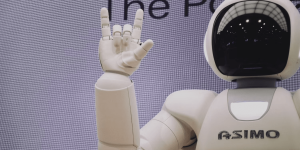
An Even Simpler Explanation of AI
Imagine teaching computers to learn like humans. Machine learning, a part of AI, operates by examining vast amounts of data and recognizing patterns, much like how you learn to ride a bike through practice. Natural language processing is akin to teaching computers to understand and speak human language. While computers still can’t fully think or understand like humans, the future holds promise for further advancements.
How Is AI Being Used Today?
-
Chatbots
ChatGPT, for instance, is a generative AI chatbot that leverages artificial intelligence to process natural human language, offering services like fact-checking, spelling and grammar checks, scheduling, and translation. Other alternatives include HuggingChat, Claude, and Google Bard, each with its unique features.

Image by https://www.makeuseof.com/ -
Data Analysis
AI enhances data analysis, identifying trends, patterns, and inconsistencies more effectively than typical computers. This capability benefits fields like research, healthcare, and business, allowing for more personalized advertisements and deeper insights into user behavior.
-
Production and Design
AI aids businesses in optimizing materials and production practices, contributing to cost-effectiveness and sustainability. By analyzing data, AI can recommend eco-friendly materials for product development, fostering a more sustainable approach.
-
Art Creation
AI-generated art, exemplified by tools like DALL-E, Night Caffe and Mid journey, can turn text-based prompts into artworks. While these tools have gained popularity, concerns about their use of pre-existing online art persist.

Image by https://www.makeuseof.com/
The Future of AI
The future of AI is both exciting and uncertain. AI holds the potential to revolutionize medicine, business practices, and daily life, but concerns about misuse exist. Regulation is crucial to ensure responsible AI development while allowing innovation to flourish. Discussions on AI regulation are ongoing, aiming to strike a balance between control and accessibility to prevent misuse.
AI is a transformative technology that continues to reshape our world. While its future remains uncertain, its impact on society is undeniable.





