



Sharper Sight: How AI is Revolutionizing Thermal Image Enhancement
- Science
- August 31, 2023
- No Comment
- 26
Introduction
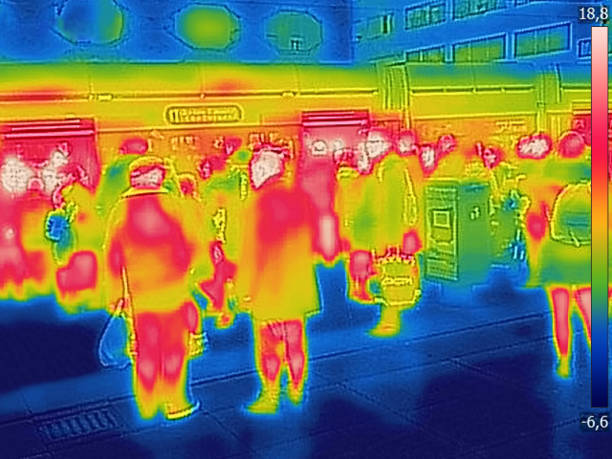
Thermal imaging is a technology that uses infrared radiation to create images of objects and scenes that are invisible to the human eye. This makes it useful for a variety of applications, such as military and defense, law enforcement, healthcare, search and rescue, and industrial inspection.
Traditional thermal imaging systems have some limitations, such as:
- Low image quality
- Low accuracy
- High noise levels
- Limited flexibility
These limitations can be overcome by using AI-enhanced thermal imaging.
AI-Enhanced Thermal Imaging
AI-enhanced thermal imaging uses artificial intelligence (AI) to improve the quality, accuracy, and flexibility of thermal images. AI can be used to:
- Remove noise from thermal images
- Sharpen thermal images
- Improve the contrast of thermal images
- Identify objects and scenes in thermal images
- Track objects in thermal images
- Classify objects in thermal images
Applications of AI-Enhanced Thermal Imaging
AI-enhanced thermal imaging is being used in a variety of fields, including:
- Military and defense: AI-enhanced thermal imaging is being used to improve the detection and identification of targets, such as enemy soldiers and vehicles. It is also being used to create thermal maps of battlefields and other areas of interest.
- Law enforcement: AI-enhanced thermal imaging is being used to improve the search for missing persons and criminals. It is also being used to monitor crowds and public spaces for suspicious activity.
- Healthcare: AI-enhanced thermal imaging is being used to detect and diagnose medical conditions, such as cancer and heart disease. It is also being used to monitor patients’ vital signs and to track the progression of diseases.
- Search and rescue: AI-enhanced thermal imaging is being used to search for survivors in collapsed buildings and other disaster areas. It is also being used to track animals and wildlife.
- Industrial inspection: AI-enhanced thermal imaging is being used to inspect machinery and equipment for defects and damage. It is also being used to monitor the performance of industrial processes.
The Benefits of AI-Enhanced Thermal Imaging
The benefits of AI-enhanced thermal imaging include:
- Improved image quality: AI can be used to remove noise from thermal images, sharpen them, and improve their contrast. This results in images that are clearer and easier to see.
- Increased accuracy: AI can be used to identify objects and scenes in thermal images more accurately. This can be helpful in a variety of applications, such as military and defense, law enforcement, and search and rescue.
- Reduced noise: AI can be used to reduce the noise levels in thermal images. This makes the images easier to interpret and reduces the risk of false alarms.
- Greater flexibility: AI-enhanced thermal imaging systems are more flexible than traditional thermal imaging systems. This is because they can be used to create different types of images, such as 3D images and thermal maps.
The Future of AI-Enhanced Thermal Imaging
The future of AI-enhanced thermal imaging is bright. As AI technology continues to develop, AI-enhanced thermal imaging systems will become even more powerful and versatile. This will lead to new and innovative applications for AI-enhanced thermal imaging in a variety of fields.
Conclusion
AI-enhanced thermal imaging is a rapidly growing field with the potential to revolutionize a variety of industries. By improving the quality, accuracy, and flexibility of thermal images, AI can make thermal imaging more useful and effective in a wide range of applications.
Visual Table
| Feature | Traditional Thermal Imaging | AI-Enhanced Thermal Imaging |
|---|---|---|
| Image quality | Low | Improved |
| Accuracy | Low | Increased |
| Noise levels | High | Reduced |
| Flexibility | Limited | Greater |
Comparative Table
| Advantage | Traditional Thermal Imaging | AI-Enhanced Thermal Imaging |
|---|---|---|
| Cost | Lower | Higher |
| Complexity | Lower | Higher |
| Ease of use | Easier to use | More difficult to use |
| Maintenance requirements | Lower | Higher |
| Durability | More durable | Less durable |
| Lifetime | Longer lifetime | Shorter lifetime |





