



A Whiff of Death: The Fascinating World of Carnivorous Plant Traps
- Science
- April 26, 2023
- No Comment
- 40
Have you ever heard of plants that not only capture insects but devour them whole? Yes, you read that right! Known as carnivorous plants, these fascinating flora have developed specialized traps to lure and digest unsuspecting prey. From sticky leaves to deadly pits, the world of carnivorous plant traps is a captivating one. Join us as we explore how these unique plants work and why they are beneficial in your garden.
What are Carnivorous Plant Traps?
Carnivorous plant traps are unique structures that allow certain plants to capture and consume small animals, such as insects and spiders. Unlike most other plants that rely on photosynthesis for energy, carnivorous plants have adapted to grow in nutrient-poor environments where they struggle to get the nutrients they need.
To compensate for this lack of nutrients, carnivorous plants have developed specialized leaves or stems designed to trap their prey. These traps come in various shapes and sizes and can be sticky, slippery or even deadly!
One of the most common types of carnivorous plant traps is the pitcher plant. Pitcher plants look like colorful vases with a lid covering their opening. Inside these “vases,” juices produced by the plant dissolve trapped insects into a nutritious soup that feeds the plant.
Another type of trap used by some carnivorous plants is called a snap trap, which works similarly to mouse traps! When an insect triggers tiny hairs inside the snap trap’s leaves, it snaps shut quickly to ensnare its prey.
Each species of carnivorous plant has its own unique way of catching food. While some are more effective than others depending on their environment, one thing remains true: these strange yet captivating plants never cease to amaze us with their fascinating adaptations!
How Carnivorous Plant Traps Work
Carnivorous plant traps are an amazing adaptation by plants to survive in harsh environments where nutrients are scarce. These traps work by attracting, capturing and digesting insects and other small prey that provide the necessary nutrients for their survival.
The mechanism of these traps varies depending on the type of carnivorous plant. For example, pitcher plants have a specialized leaf structure called a “pitcher” that contains digestive enzymes at the bottom. The inside walls of this structure are slippery, making it difficult for prey to climb out once they fall in.
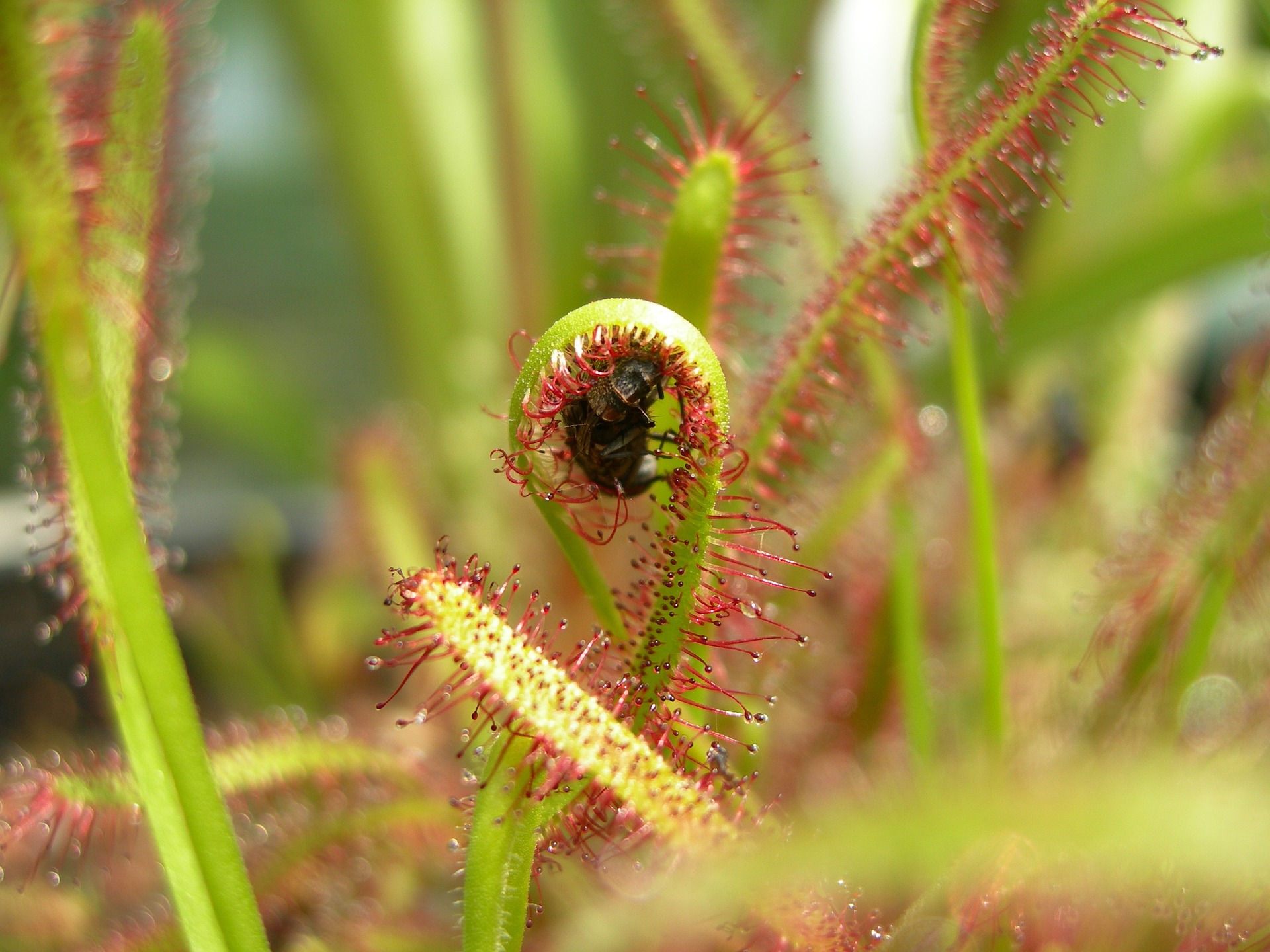
Similarly, Venus Flytraps have modified leaves with trigger hairs that when touched twice within a certain amount of time will cause the leaves to snap shut trapping the insect inside. Sundews use sticky mucilage droplets on their leaves which trap insects like glue.
These diverse types of carnivorous plant traps provide unique ways for these plants to capture food sources while surviving in nutrient-poor soils or environments such as bogs or swamps.
Types of Carnivorous Plant Traps
Carnivorous plants have evolved different types of traps to lure and capture their prey. Each trap has a unique structure and mechanism that allows the plant to catch insects or other small animals. Here are some of the most common types of carnivorous plant traps:
Pitcher Trap: This trap is shaped like a deep, slippery tube filled with digestive enzymes at the bottom. The pitcher attracts insects by offering nectar or bright colors on its lip, making it easy for them to slip into the tube where they become trapped.
Flypaper Trap: This type of trap features sticky mucilage on its leaves that ensnares any unsuspecting insect that lands on it. Once caught, the insect struggles futilely while slowly getting drawn towards its doom.
Snap Trap: These clever carnivores use sensitive trigger hairs around their leaves which snap shut when an insect touches them, trapping it inside before digesting it over time.
Bladder Trap: Found mostly in aquatic environments; bladderworts suck in water through tiny pores alongside their “bladders”. When an unsuspecting creature triggers one of these bladders, it sucks them in with lightning speed!
Carnivorous plants continue to amaze us with their ingenuity and adaption among ecological niches worldwide!
The Benefits of using Carnivorous Plant Traps
Carnivorous plant traps have more benefits than just being fascinating to observe. These plants can actually be beneficial for controlling pests in your garden or home.
One of the main benefits of using carnivorous plant traps is that they are a natural way to control pests without the use of harmful chemicals. You don’t have to worry about toxic pesticides harming other plants, animals, or people.
Another benefit is that you won’t have to deal with unsightly insect traps or sticky tapes lying around your house or garden. Carnivorous plant traps blend in naturally and add an element of beauty to any space.
In addition, these plants require very little maintenance once established and can live for many years. They also make great conversation starters and are sure to impress guests with their unique characteristics.
By introducing carnivorous plant traps into your garden or home, you’re helping contribute to biodiversity by providing habitats for insects and other small creatures that would normally be killed off by traditional pest control methods.
Incorporating carnivorous plant traps into your gardening routine can provide not only aesthetic pleasure but also environmental benefits as well.
Conclusion
Carnivorous plant traps are fascinating and unique creatures that have adapted to their environment in a truly remarkable way. With the ability to capture insects and other small organisms for nutrients, these plants have developed some of the most intricate and sophisticated traps seen in nature.
While they may seem like something out of a sci-fi movie, carnivorous plant traps offer a range of benefits. From helping with pest control to providing valuable scientific insights into how plants evolve over time, there is no doubt that these captivating plants hold an important place in our world.
So whether you’re looking for an interesting addition to your garden or simply want to learn more about the incredible diversity found within the natural world, be sure to explore this fascinating topic further. Who knows what other wonders we might discover along the way?





