This article is designed to explain the principles of magnetic resonance imaging (MRI) in a comprehensive and accessible manner. It targets both medical professionals and general readers who are curious about the underlying mechanisms of MRI technology. The article will cover the fundamental principles, components of an MRI machine, and the benefits of MRI in medical diagnostics.
Introduction to MRI: Peering Inside the Body with Magnetic Resonance
In this section, we’ll provide a brief introduction to MRI and its significance in modern medical imaging. Readers will gain an understanding of how MRI technology offers non-invasive insights into the body’s structures and functions.
The Science Behind MRI: Navigating the Magnetic Field
Here, we’ll delve into the principles of MRI. Readers will learn about the interaction of hydrogen nuclei within the body with the strong magnetic field generated by the MRI machine. We’ll explain concepts like precession and relaxation, which form the foundation of MRI imaging.
The MRI Machine: Components and Processes
This section will focus on the components of an MRI machine and how they work together to generate images. From the magnet and radiofrequency coils to gradient coils and the computer system, readers will gain insight into the intricate processes that enable MRI imaging.
From Data to Images: Image Reconstruction and Interpretation
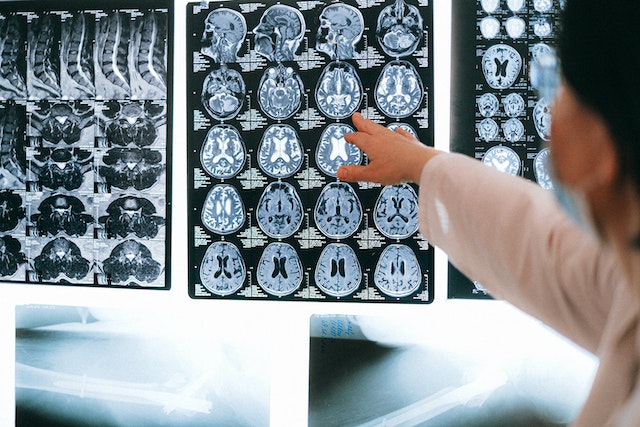
Here, we’ll discuss the transformation of raw data collected during an MRI scan into detailed images. Readers will understand how computer algorithms process data and create visual representations that aid medical professionals in diagnosis.
Photo by Anna Shvets: https://www.pexels.com/photo/close-up-shot-of-mri-results-4226264/
The Advantages of MRI: Precision and Safety in Diagnostics
In this section, we’ll explore the benefits of MRI in medical diagnostics. From its ability to provide high-resolution images of soft tissues to its non-invasive nature and lack of ionizing radiation, readers will grasp the unique advantages of MRI.
Unveiling the Mysteries of MRI: How Does It Work?
Imagine stepping into a world where medical imaging goes beyond the surface, revealing intricate details of the body’s internal structures. This is the realm of magnetic resonance imaging (MRI), a technology that has transformed modern diagnostics. In this article, we’ll unveil the mysteries behind MRI, shedding light on its inner workings and its remarkable role in medical imaging.
Introduction:
Meet Dr. Jonathan Harris, a renowned radiologist with a passion for demystifying complex medical concepts. Dr. Harris’ insights will guide us as we journey through the fascinating world of MRI, uncovering the science that enables us to peer inside the human body.
Peering Inside the Body with Magnetic Resonance:
MRI offers a unique window into the body’s structures and functions, without the need for invasive procedures. This technology has become indispensable in diagnosing a wide range of medical conditions, providing detailed images of soft tissues, organs, and more.
The Science Behind MRI: Navigating the Magnetic Field:
At the heart of MRI lies the interaction between hydrogen nuclei (protons) within the body and a strong magnetic field. Through a process called precession and relaxation, these nuclei emit signals that are captured and transformed into images by the MRI machine.
The MRI Machine: Components and Processes:
An MRI machine is a marvel of engineering, composed of various components that work in harmony. The powerful magnet generates the primary magnetic field, while gradient coils and radiofrequency coils manipulate and detect signals. A sophisticated computer system processes the data for image reconstruction.
From Data to Images: Image Reconstruction and Interpretation:
Raw data collected during an MRI scan undergoes complex mathematical transformations through computer algorithms. These transformations result in the creation of detailed images that medical professionals use to diagnose conditions, plan treatments, and monitor progress.
The Advantages of MRI: Precision and Safety in Diagnostics
MRI’s precision in imaging soft tissues, such as the brain, muscles, and organs, is unparalleled. Unlike X-rays and CT scans, MRI does not use ionizing radiation, making it a safe option for repeated scans. Its versatility and ability to capture dynamic processes further enhance its diagnostic value.
In conclusion, MRI technology has unveiled a new frontier in medical imaging, enabling us to explore the human body in ways previously unimaginable. Dr. Jonathan Harris’ dedication to simplifying complex concepts mirrors the accessibility of MRI, which empowers medical professionals and patients alike to make informed decisions about health.
Introduction: OpenAI Investment In the fast-paced world of technology investments, Microsoft’s foray into OpenAI has sparked curiosity and concerns alike. Join…